
Local knowledge becomes useful in linking pargeted buildings to individual pargeters and thanks are due to Dave Lewis, retired local pargeter for much of the information in this section. Where possible recollection has been confirmed by written evidence and planning and listed building records are a useful source.
In the twenty first century but not generally in the twentieth century (the Grade I listed Old Sun Inn is an exception) listed building consent has required that listed buildings are repaired with lime plaster. On unlisted buildings stamped parget invariably uses sand and cement.
Table of Contents
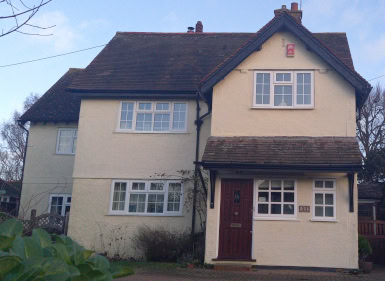
21 Summerhill Road
Summerhill Road and Springhill Road were laid out by 1919[1] as part of a planned development on the edge of Saffron Walden, but there were as yet no houses to be seen. By 1925[2] there was a resident of 19 Summerhill so it is likely that the villa 21 Summerhill was built around this date and the front elevation includes one of the Arts and Crafts Terrace stamps along with panels of a fan pattern which have since been over-plastered. This building has a gable, irregular windows and pentice, so may once have looked more like the pre-war Arts and Crafts Terrace houses.
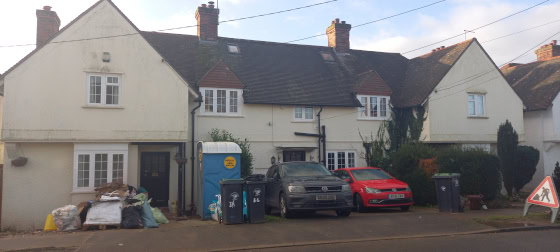
36-46 Summerhill Road
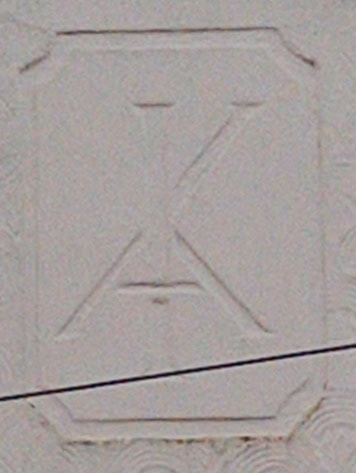
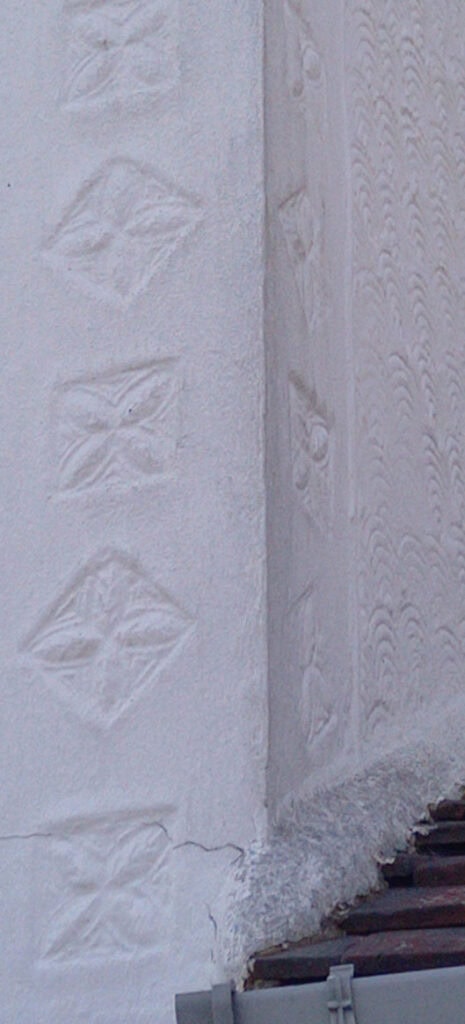
36, 38, 40 and 42, 44, 46 Summerhill Road are pargeted terraces, though not using the ‘Arts and Crafts Terraces’ pargeting stamps. They are said to have been built in 1926 as artisans cottages[3] and the pargeting includes benefactor initials. Some of the pargeted initials are now plastered over but probably the same sets of initials repeat on both buildings. The clearest examples are in figures 4 and 5, which could be L, F, G and A, K. The ‘G’ is said to be for ‘Gibson’ though it was not possible to find in the 1921 census any suitable candidate in the Saffron Walden area with Gibson as either a first or surname. Perhaps the ‘F’ is for Fry, relations of the Gibsons.


A.G. Claydon
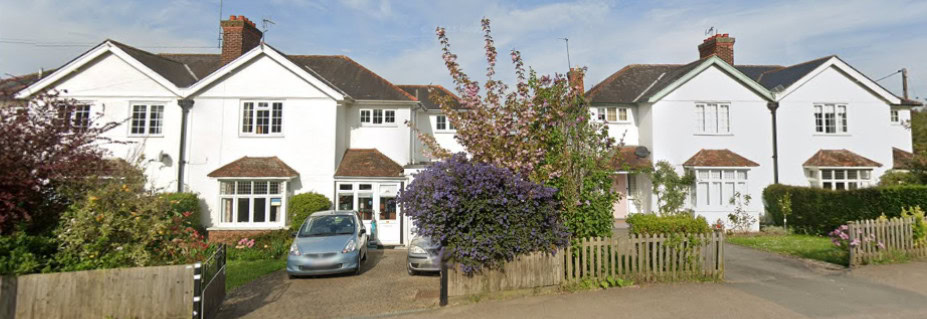
102-108 Debden Road on the corner of Summerhill Road is a pair of pargeted semi-detached houses built in 1922 by A.G Claydon, a building company from nearby Newport which no longer exists but which has been mentioned several times by local residents in connection with pargeting. 35 to 40 years ago A G Clayden from Newport were one of the last local building companies to have a large selection of pargeting stamps.[4] Cyril Byford was a director from 1952 to c1970[5] and the family kept a few of his pargeting stamps but unfortunately the weather got to them and they went rotten.[6]
Parget goes out of fashion
By the 1930s parget was out of fashion again and there is no new work until the late 1950s. There is no evidence of any training and continuity of pargeting, so pargeters must have taught themselves which accounts for the variable quality of recent work.
The renewed interest in pargeting is part of a general increase of interest in conservation. The Sun Inn was listed in 1951 and many more buildings were listed in the mid 1970s, after which planning officers took an interest in the materials and techniques used when renovating those buildings.
The Old Sun Inn
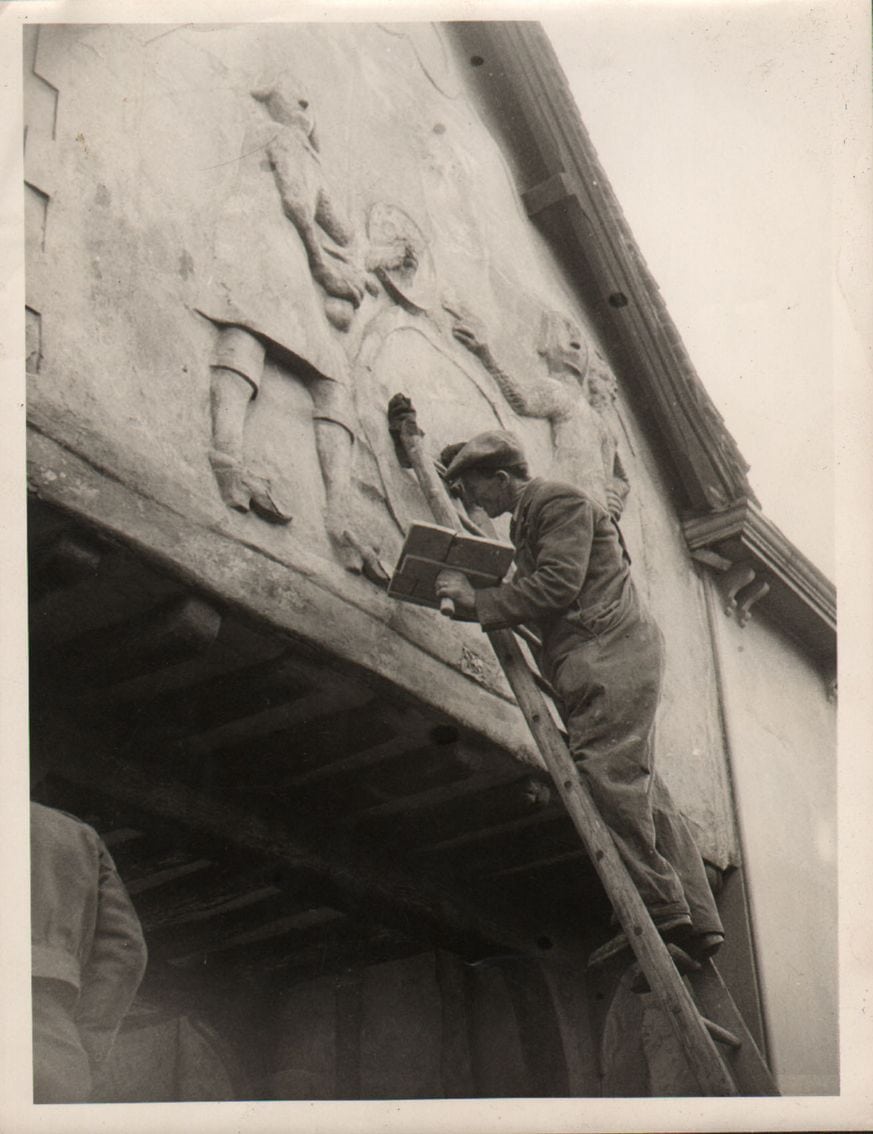
In 1932 the Town Clerk, William Adams, in conjunction with the Society for Protection of Ancient Buildings (SPAB) launched an appeal to raise funds to enable the National Trust to purchase the Old Sun Inn in 1933 and lease it to SPAB.[7] The war and lack of funds caused a delay but in 1963/4 Tom Cook (c1945-c2015), an employee of A.G. Claydon repaired the Sun Inn parget for SPAB as they prepared the building for sale as shops, offices and flats. [8]

Six more English Towns
In 1981 Alec Clifton-Taylor filmed in Saffron Walden for a BBC television programme ‘Six more English Towns’[9]. He said about the restoration of the Old Sun Inn
It was under the supervision of architect Marshall Sisson, including a crane (figure 9) which had almost crumbled to nothing. The contract for the restoration was awarded to AG Clayden (Newport) Ltd and the work completed in 1964. The restoration of the pargetting was undertaken by Mr E Whetstone of West Ham and by Mr T Cook of Harvey Way, Saffron Walden. [10]
For the programme, Tom Cook, Jed Duff and Fred Bacon pargeted a wall near Market Hill which demonstrated the use of a range of parget stamps. During the filming a photo was taken of them at work, which is now in Saffron Walden Museum along with a demonstration panel and the parget stamp which was used to make the panel.[11]


Frank and Dick Faircloth
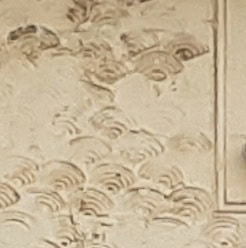
Frank Faircloth was 49 in 1911[12], working as an independent bricklayer. In 1917[13] he was a lime manufacturer in Little Walden Road and in 1925/6[14] a builder. His son Richard Samuel (Dick) Faircloth was a 30 year old building contractor and undertaker in 1939[15] and Dave Lewis said that Dick was responsible for the rather shoddy fan pargeting on 28 Bridge Street.
Sid Sutton
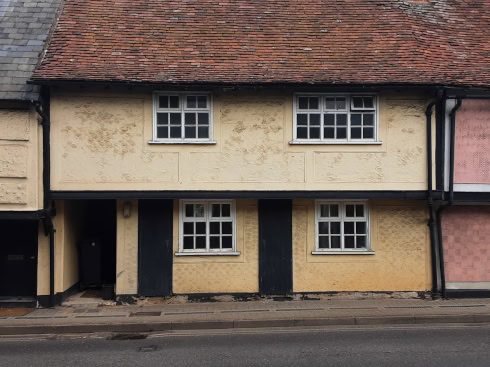
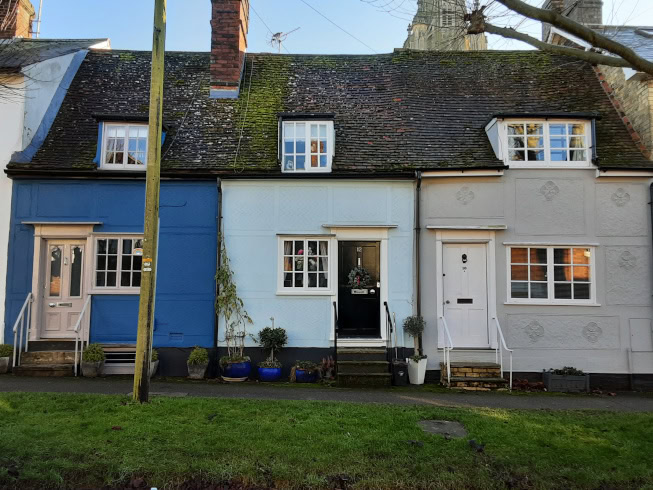
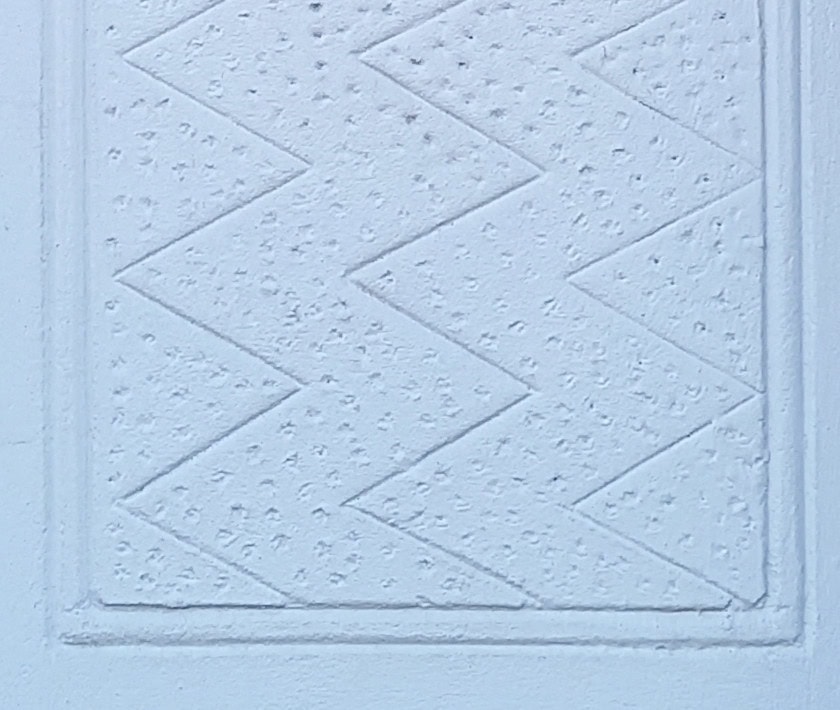
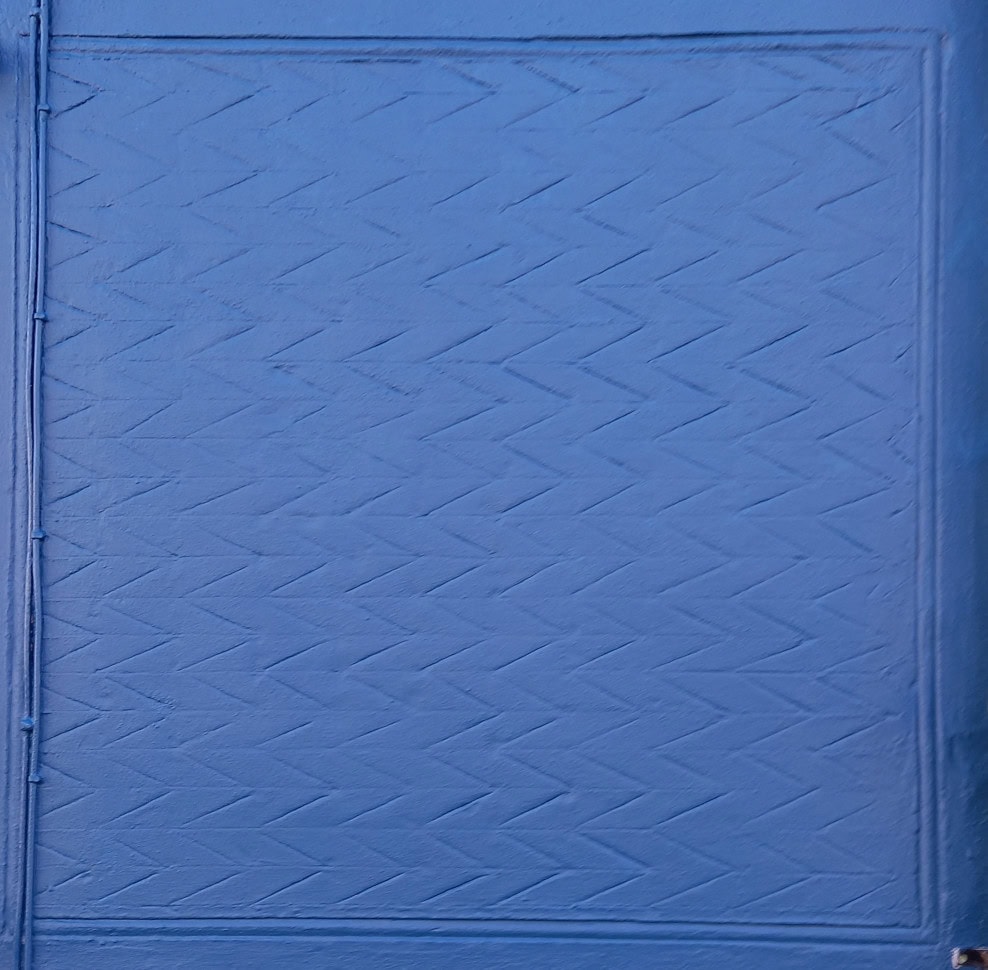
Sid Sutton was a pargeter in the 1960s and 1970s, he died 30 years ago[16]. 23 Castle Street was created by the conversion of two cottages into one[17] and Sid Sutton did the parget 40 years ago.[18]. This work is best quality pargeting, with the stamps extending tidily to the panel border which is smoothly finished with neat chamfers.
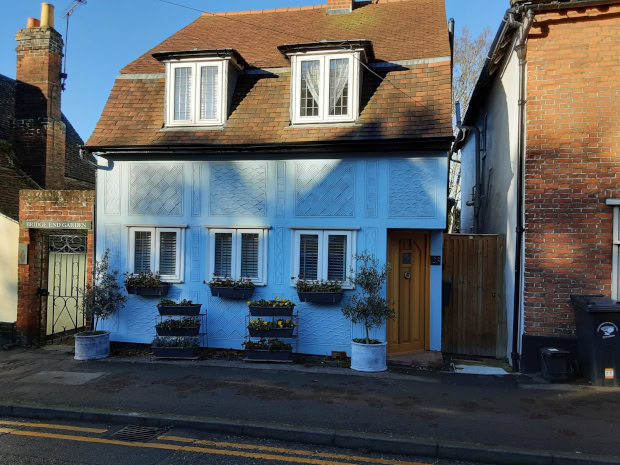

10 12 14 Castle Street was owned by a relation of Sid’s and numbers 12 and 14 were pargeted by Sid Sutton[19]
Cherry Vanoli
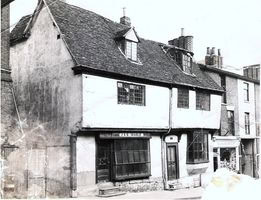
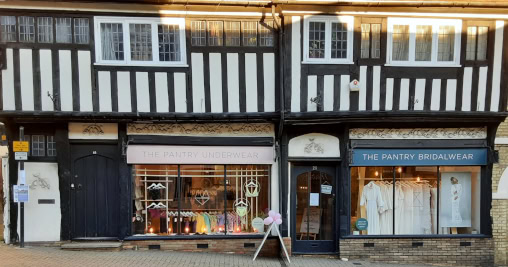
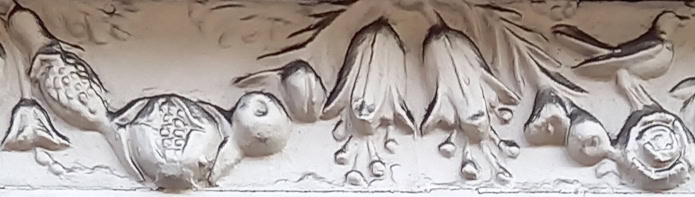
18 High Street is a late 15th or early 16th century building. In the 1970s it was renovated and at this time Cherry Vanoli added the friezes and parget panels (figures 21 and 22). According to the listed building record they are ‘remade from casts of old work’ but no information about their source has been found. Cherry together with his son Paul who is now also retired specialised in repairs and renovations to old buildings.[20]

The Hayward family
In 2019 the Hayward family deposited a collection of pargeting tools in Saffron Walden Museum. Most of the male members of the family worked as plasterers from at least 1881 to 1939. The family was based in the Bishop Stortford area about 15 miles from Saffron Walden, but the museum was informed that they also worked in Saffron Walden.
James Hayward was born in Canterbury in 1848, and by 1881 was living in Stansted Mountfitchet, about 10 miles south of Saffron Walden, working as a plasterer.[21] He and his wife moved to Bishop’s Stortford where they and brought up a large family. At least three of the boys followed him into the plastering trade with the eldest son taking over the business. In 1911[22] James Hayward’s eldest son James Walter Hayward was described as ‘Plasterer and Employer’ and described in 1939 as ‘Master Plasterer on own account’.[23] In 1939 at least three of James Walter Hayward’s sons were working in the plastering trade, again with the eldest son Archibald Hayward taking over the business and being described as ‘Master Plasterer Heavy Work’[24]. Coming from Canterbury, where the pargeting trade died out several hundred years ago, the Hayward family would not initially have known how to do pargeting and looking at the tools that they used, it seems probable that most of their work was in general plastering. Figure 23 is a fan stamp in the collection which is the correct shape to interlock correctly. It has been broken and repaired at last twice and would immediately break again if it were used. One might speculate that they acquired a stamp and kept it in case a client asked for the pattern and latterly as a template, but they did not own a useable fan stamp of this type. Figure 24 is a fan stamp too, but does not interlock and it is possible that it was used to make the rather poor repair in figure 25.
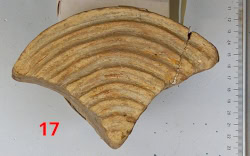
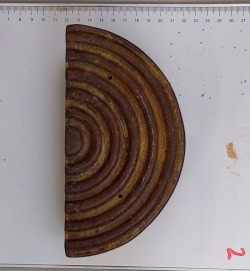
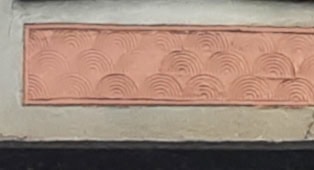
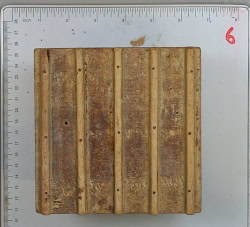
In the collection is also a group of simple but serviceable basket weave and chevron stamps, made by pinning pieces of timber together and some curious flower stamps. The flower stamps are well carved but very deep and it would be difficult to release them easily. Unusually, small holes have been drilled in them, perhaps to help the release. In theory this is a good idea, but does not seem to have been successful as the stamps do not show significant signs of wear. Such deep stamps would seem better suited to make cast motifs, but they all have handles on the back so are definitely not designed for use on the bench. The Hayward set of stamps serves to illustrate that producing good quality stamped parget is not a trivial skill.

Dave Lewis
Dave Lewis is a retired plasterer and pargeter from the nearby village of Ashdon, who created many stamped pargets in Saffron Walden during the late twentieth and early twenty first centuries.[25] Interviews with Dave were an important source for this dissertation as he has an unsurpassed knowledge of pargeting in Saffron Walden over the last 100 years. Dave has a good collection of his own wooden stamps though he says that some have been borrowed by his son and others.


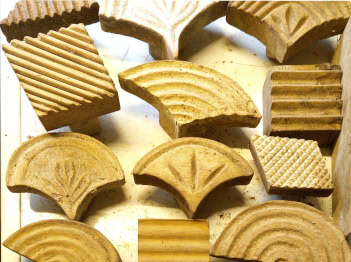
Dave warned that on older buildings he worked in an earlier style, perhaps with a thin line border and repeated stamp patterns, softened with a brush to give the appearance of age, however the cement based plaster is the give away.
Arranged stamp designs
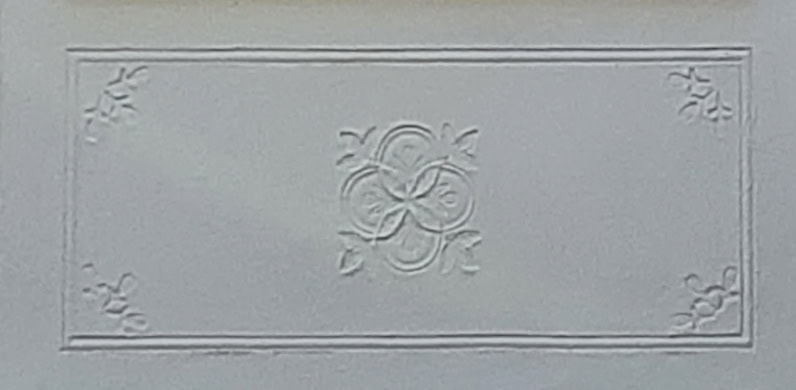
In the late twentieth century a new stamped parget layout became popular, which will be called the ‘arranged stamp design’ and this is a good example by Dave Lewis. First seen in the Arts and Crafts period, a typical twentieth or twenty first century arranged stamp design has a medium or even a wide flush bead border, a flat or textured infill and a stamped design where the stamp positions are arranged rather than repeated.
Tom Jackson
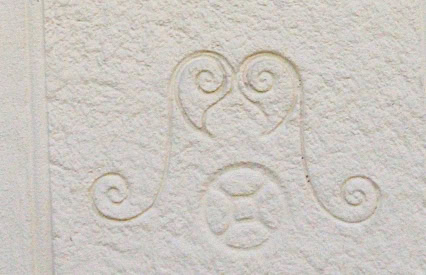
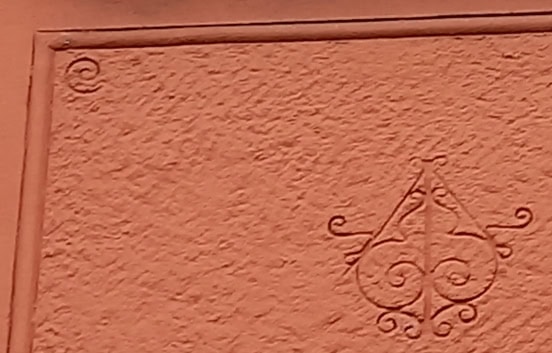
Tom Jackson was a builder for whom Dave Lewis subcontracted and who also did pargeting himself using Dave’s stamps. He said that Tom Jackson did a crows foot design (three dots) parget on an unidentified building “Castle street near museum street”. Painters Farmhouse, Butlers Lane was pargeted c1964[26] with a medium flush bead, some panels are of repeated basket weave and some brushed with an arranged design using one round stamp and two distinctive metal stamps. Dave Lewis said that this parget is probably by Jackson as he used metal stamps.[27] On this basis the similarly pargeted 25 25A Hill Street is also by Jackson. It was pargeted c1965[28] with a medium flush bead, some panels of repeated basket weave, some brushed with an arranged stamp design using some of the same stamps as used on Painters Farmhouse and some new ones.

15 Castle Street is confidently pargeted with a narrow flush bead enclosing a repeated stamped basket weave and Dave Lewis says that Tom Jackson pargeted this and also 42 Castle Street.[29] The work by Tom Jackson is normally of good quality, but 42 Castle Street is not of the same standard, so this might be a misattribution.


Freehand pargeting
In the late twentieth century, freehand pargeting made an appearance again. Freehand parget designs are much more satisfactory when modelled with lime and chalk, which behaves rather like clay than it is when modelled with cement and sand, which has a tendency to slide around, so freehand pargeting today will typically be done in lime and chalk. However crossover mixes are quite possible, For example when I started pargeting in 1999 I used a lime and sand plaster, then in the early twenty first century I remember Rory Sumerling at Anglia Lime doing tests on old plaster and realising that it contained no sand at all.
Klaudijus Skromanas
Klaudijus Skromanas pargeted freehand on 26 Ashdon Road in 2019. He modelled three panels in the bay, crocus, rose/eagle/shamrock, green man, also a mouse in the boot scraper and another mouse by the back gate. Klaudijus studied art in Lithuania and is able to turn his hand to most aspects of building work.[30] He left his initials (KS) in the bottom right hand corner of the front pargeting.
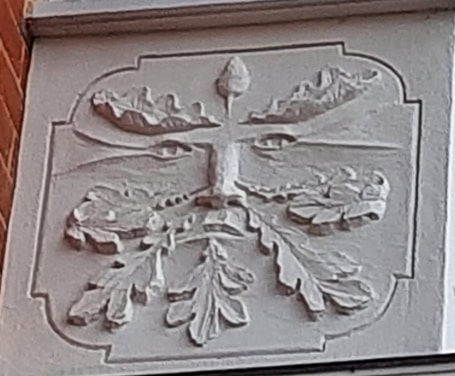
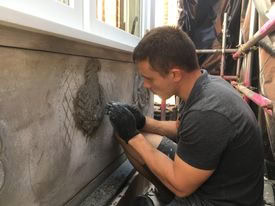
The freehand pargeter of today is likely to sign their work in some way, which is not a practice seen in the past. Combed and stamped parget today does not usually have a signature.
The Old Sun Inn
The Old Sun Inn is now in safe hands. In 2009 Douglas Kent Technical and Research Director of SPAB.[31] bought E8, E9 and E10 and commissioned a programme of conservation by Mc Neilage Conservation.[32] Soon after, the first floor parget on E3 was failing when Torquil Mc Neilage advised on its conservation. In the event, it was replaced by another contractor and has failed again.[33] More recently Douglas Kent has bought the remainder of the Sun Inn[34] and further parget conservation works are planned.
Recent parget
This is not an exhaustive list of pargets which have been modelled during the last fifty years, rather it highlights those for which there is more information available beyond their mere existence.
| 53 Gold Street | trellis/grid by Dave Lewis |
| 23 Gold Street | Builder from Linton |
| 7 Myddlyton Place | Before 1997[35], possibly by Dave Lewis |
| 2 Myddlyton Place | c1992[36], possibly by Dave Lewis |
| Priory, Common Hill | probably c1975[37] |
| 1 Johnson’s Yard. | 20th century using many stamps |
| 26 Castle Street | Parget by the owner, who is now in his 90s[38] |
| 50 Castle Street | Interesting set of stamps |
| 15 Audley Road | Crocus design commissioned by the owners Diana and David Hoy 25 years ago. Work carried out by Jed Duff, a local craftsman (who also pargeted for the BBC programme ‘Six more English Towns’)[39] |
| 58 Gold Street | Dave Lewis pargeted the fans |
| 73 75 Castle Street | By Matt Smith (now a building surveyor) and Chip in 2001. |
| 11 High Street | Dave Lewis |
| 71 Ashdon Road | Dave Lewis |
| 4 4a Gold Street | Dave Lewis. Rear elevation for Philip Roe 1997[40] |
| 19 21 Bridge Street. | Dave Lewis |
| 20 Castle Street | Dave Lewis. Gable end 1997[41] |
| 21 Mill Lane | Dave Lewis 2003[42] |
| 52 Gold Street. | Dave Lewis. before 2018[43] |
| 56 58 60 High Street | Dave Lewis c1958[44] |
| 58 Gold Street | Dave Lewis 1979[45] Panels only, not the coach and horses |
| 7 Farmadine grove | Dave Lewis. 1962[46] |
| 9 Freshwell Street | Dave Lewis 2000[47] |
| 10 Gibson Way | Freehand. Bill Sargent 2022 |
| Herbert’s Debden Lane | Pip Suckling for builders Francis of Thaxted |
[1] Ordnance Survey Map, Ordnance Survey Office, 1919 https://www.oldmapsonline.org/ [accessed 4 May 2023]
[2] not given, Kelly’s Directory 1925/6 (Kellys Directories Ltd, 1925).
[3] Homeowner at 36 Summerfield, 2023.
[4] Shard, Graham ‘A.G.Clayden’, https://www.facebook.com/groups/178659268934816/?multi_permalinks=2970898526377529 [accessed 4 May 2023]
[5] Janie Watson, ‘A.G. Clayden (Newport) Ltd’, Google Docs, 1993 <https://docs.google.com/file/d/0B7wEAtw8QP5bSnNoSHFNVXY2OUU/edit?usp=embed_facebook> [accessed 13 January 2025].
[6] Bazley, Christopher, ‘A.G Clayden’ https://www.facebook.com/groups/178659268934816/search/?q=christopher%20bazley [accessed 4 May 2023]
[7] Douglas Kent, ‘The Old Sun Inn’, 1 March 2023.
[8] Alec Clifton-Taylor, Saffron Walden (Alastair, 1988).
[9] Alec Clifton-Taylor ‘Saffron Walden’ in Six More English Towns, BBC Sep 29 1981
[10] Clifton-Taylor ‘Saffron Walden’
[11] ‘Database of Items Held by Saffron Walden Museum’ (Saffron Walden Museum, 2022), sec. SAFWM : 1964.209.
[12] ‘Census Returns of England and Wales, 1911’ (HM Government, 1911), The National Archives, Kew.
[13] not given, Kelly’s Directory 1917 (Kellys Directories Ltd, 1917).
[14] Kelly, 1925/6
[15] ‘1939 England and Wales Register’ (HM Government, 1939), The National Archives, Kew. England and Wales Register 1939’
[16] Dave Lewis, Interview with a retired pargeter, 2022
[17] Planning Application 23 Castle Street, 1964, SWB/CC92/64 https://www.uttlesford.gov.uk/planning-applications [accessed 4 May 2023]
[18] Dave Lewis, Interview with Dave Lewis, retired pargeter, 2022.
[19] Lewis, ‘Interview with Dave Lewis, Retired Pargeter’.
[20] Jim Ketteridge ‘Cherry Vanoli’ https://www.facebook.com/groups/178659268934816/?multi_permalinks=2964267307040651 [accessed 4 May 2023]
[21] ‘Census Returns of England and Wales, 1881’
[22] ‘Census Returns of England and Wales, 1911’
[23] ‘England and Wales Register 1939’
[24] ‘England and Wales Register 1939’
[25] Lewis.
[26] Planning Application Painters Farmhouse, 1964, SWB/0072/64 https://www.uttlesford.gov.uk/planning-applications [accessed 4 May 2023]
[27] Lewis
[28] Planning Application 25 25a Hill Street’, 1965 SWB/0022/65 https://www.uttlesford.gov.uk/planning-applications [accessed 4 May 2023]
[29] Lewis.
[30] Robert Clarke, ‘Pargeting on 26 Ashdon Road by Skromanas Klaudijus’, 2023 <www.facebook.com/Eagle105>.
[31] Kent, p. 13.
[32] Mc Neilage Conservation, Nos 25 and 27 Church Street, Saffron Walden Conservation Report, 2012 2010, Douglas Kent.
[33] Kent, ‘The Old Sun Inn’.
[34] Kent, ‘The Old Sun Inn’.
[35] Sold House Prices 1997 https://landregistry.data.gov.uk [accessed 4 May 2023]
[36] Planning Application 2 Myddlyton Place, 1992, UTT/0645/92/LB https://www.uttlesford.gov.uk/planning-applications [accessed 4 May 2023]
[37] Planning Application The Priory, 1975, UTT/0789/75/LB https://www.uttlesford.gov.uk/planning-applications [accessed 4 May 2023]
[38] Owner. No 28 Castle street, 2022.
[39] David Hoy, Owner. 15 Audley Road, c1997.
[40] Planning Application 4 4a Gold Street, 1997, UTT/1151/96/LB https://www.uttlesford.gov.uk/planning-applications [accessed 4 May 2023]
[41] Planning Application 20 Castle Street, 1977, UTT0522/77/LB/CA https://www.uttlesford.gov.uk/planning-applications [accessed 4 May 2023]
[42] Planning Application 21 Mill Lane, 2003, UTT/0406/03/FUL https://www.uttlesford.gov.uk/planning-applications [accessed 4 May 2023]
[43] Planning Application 52 Gold Street, 2018, UTT/18/2779/LB https://www.uttlesford.gov.uk/planning-applications [accessed 4 May 2023]
[44] Planning Application 56-60 High Street, 1958, SWB/0037/58 https://www.uttlesford.gov.uk/planning-applications [accessed 4 May 2023]
[45] Planning Application 58 Gold Street, 1979, LB/UTT/0951/79/CA https://www.uttlesford.gov.uk/planning-applications [accessed 4 May 2023]
[46] Planning Application 9 Audley Road, 1960, SWB/0988/60 and SWB/0940/62 https://www.uttlesford.gov.uk/planning-applications [accessed 4 May 2023]
[47] Lesley Ann, Information from the owner, 2022.